Cymatics: the shape of sound
What it is
Cymatics is the study of how sound becomes visible. When a surface vibrates, sand, water or salt on it moves into patterns. Each frequency draws its own shape.
A short history
In 1787, the German physicist Ernst Chladni drew a violin bow along the edge of a metal plate covered with sand. The sand moved and formed clear geometric figures, now called Chladni figures. In 1967, the Swiss researcher Hans Jenny named this field “cymatics”, from the Greek kyma, meaning “wave”.
How the patterns form
A vibrating plate has places that move a lot and places that stay still. The sand leaves the moving areas and gathers on the still lines, called nodal lines. These lines draw the pattern. When the frequency goes up, the pattern becomes more detailed.
What shapes the pattern
- The frequency
- The size and shape of the plate
- The material: metal, glass, water
- The volume
432 Hz and 440 Hz
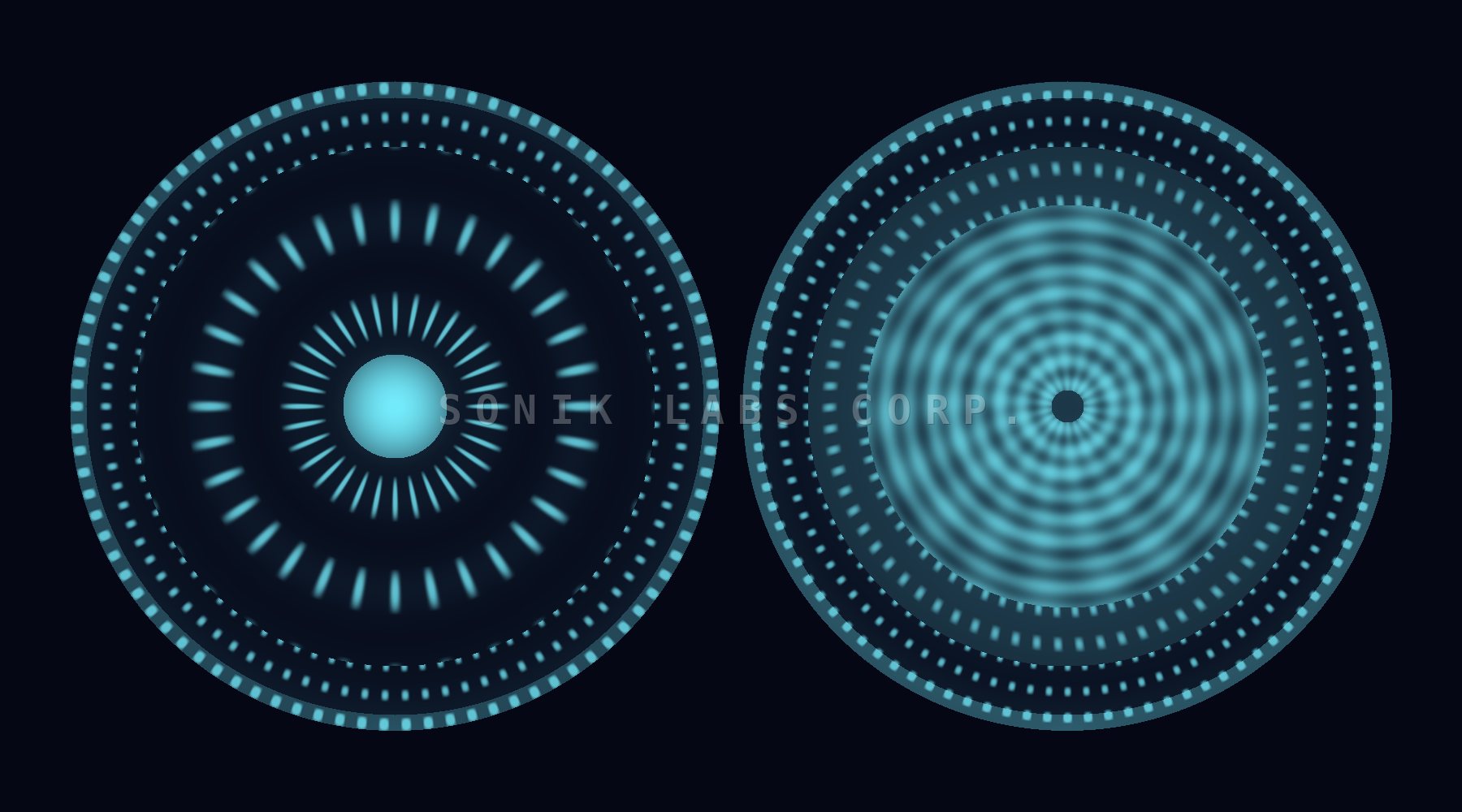
Every frequency has its own geometry, so 432 Hz and 440 Hz draw different figures. Many people who compare them on the same plate or in water describe the 432 Hz patterns as rounder, more balanced and more harmonious. The 440 Hz patterns often feel sharper and busier.
See the difference
Press play to hear each frequency while its shape rises on the water.
Sonik Labs illustration
How Inner Dive uses it
Everything in Inner Dive is tuned to A4 = 432 Hz. In the Generator, you can play both frequencies and feel the difference yourself.